
Very Young Learners
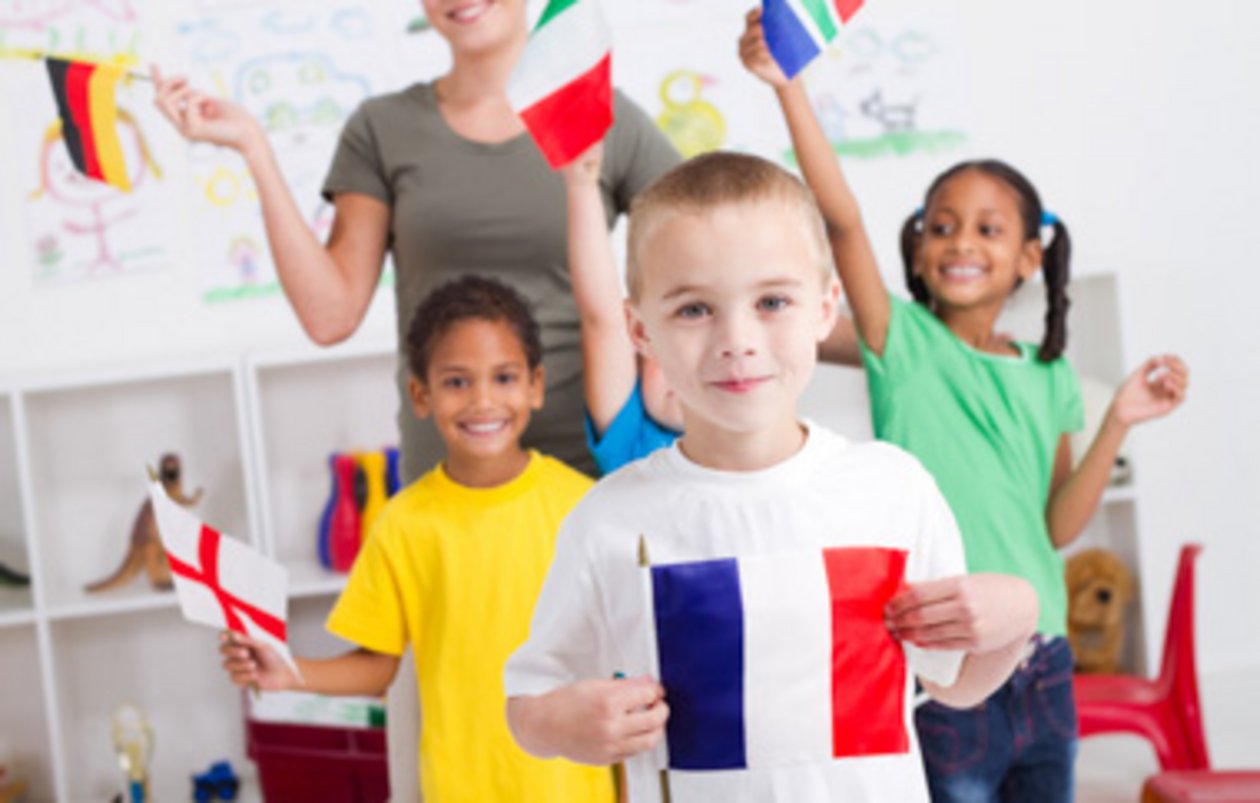
VYLs learn with us with all of their senses, for example by combining certain words with a movement or doing thematic arts and crafts. Through this combination of hearing, seeing, feeling, and doing, the learning content is absorbed holistically. The children
sing, play, clap, stomp, paint, or do arts and crafts. These different approaches to the foreign language enable a natural, dynamic division of the lesson. Phases of concentration are followed by phases of freedom in the same way that energetic games are followed by quieter activities.
The holistic approach not only focuses on practicing the target language, but on the whole child. Language is experienced through action, play, movement, and perception. For this reason, the children's feelings, experiences, and wishes are also addressed and taken into account in language lessons.
Teaching materials: Matching worksheets, gamified worksheets, puzzle sheets, hand puppets, songs, picture books, handicrafts, flashcards, coloring, experiments for the senses, games for the senses, movement games, as well as cutting-edge and age-appropriate digital resources.
… integrating cutting-edge, age-appropriate digital materials and resources …
Aim: The children should develop a feeling for a new language in a playful way and without pressure to perform. Memory, concentration, oral and fine motor skills, and speech rhythm are trained.
Our concept applies to lessons in English, French, Spanish, and Italian
Young Learners
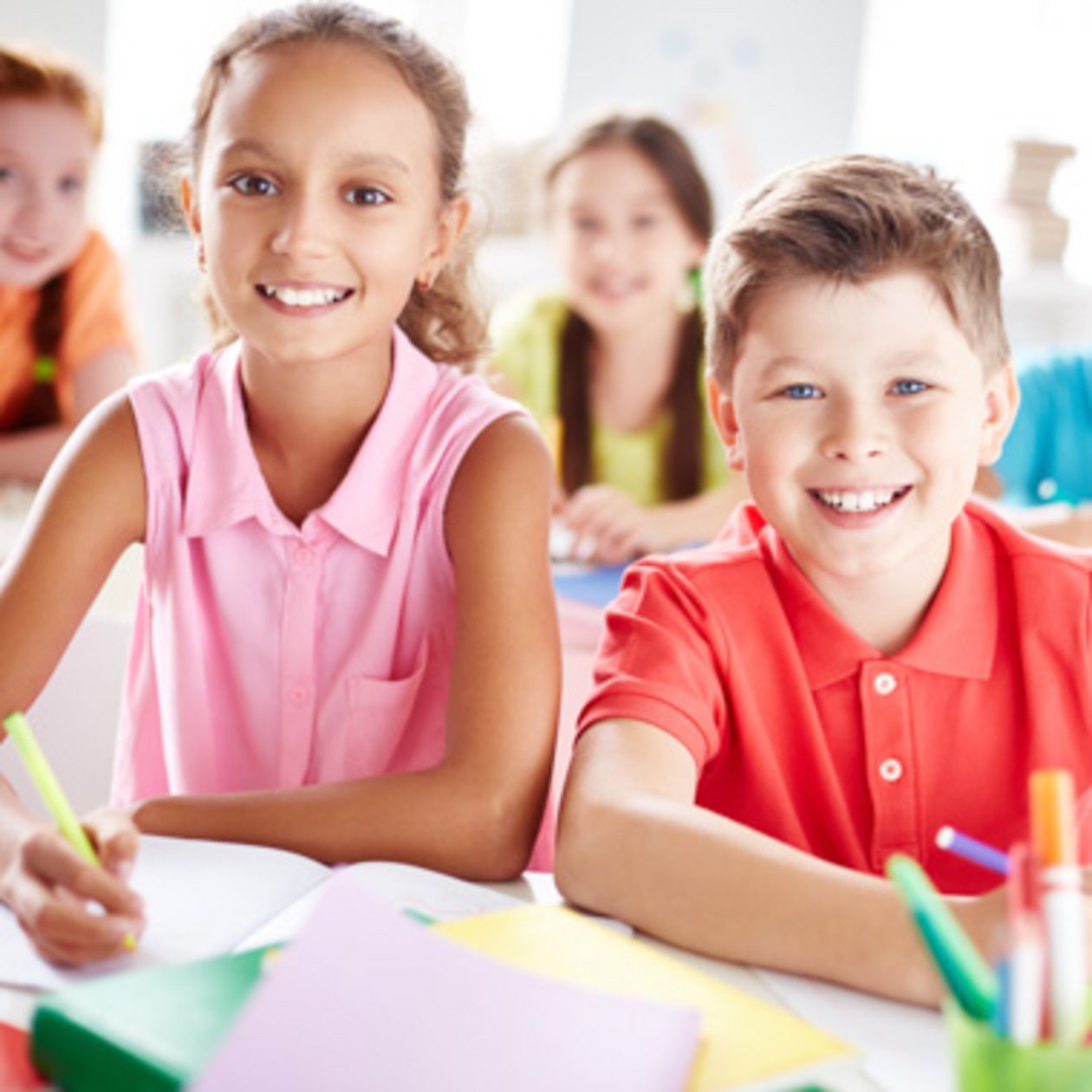
In our group classes, Young Learners are introduced to typical forms of teaching without experiencing purely frontal teaching, which means that we require a lot of initiative and independent learning. The holistic approach applies to the YLs in the same way that it applies to the VYLs. In addition to sensory perception and learning through doing, the use of writing and the training of self-learning techniques come into play. For example, we practice reading comprehension and strategies in a gamified manner, such as scanning for answers or memorizing facts. Other typical teaching elements such as grammar, sentence structure, listening comprehension, reading skills, text comprehension, pronunciation and written language style are trained in a non-traditional manner, where the students are encouraged to use the structures in a more communicative way than they are used to at school. In addition, the competent use of flashcards, posters, and games, as well as techniques for self- and partner-monitoring are practiced.
Teaching materials: Vocabulary worksheets, gamified worksheets, puzzle worksheets, song lyrics and music, language games, learning posters, short films, writing games, dictionaries, role-playing games, as well as cutting-edge and age-appropriate digital resources.
Aim: The children are introduced to the foreign language in depth; their language skills are gradually expanded and an independent learning attitude is practiced. In this way, our language trainers teach responsibility for independent learning.
Our concept applies to lessons in English, German as a foreign language (DaF), French, Spanish and Italian.
Teens
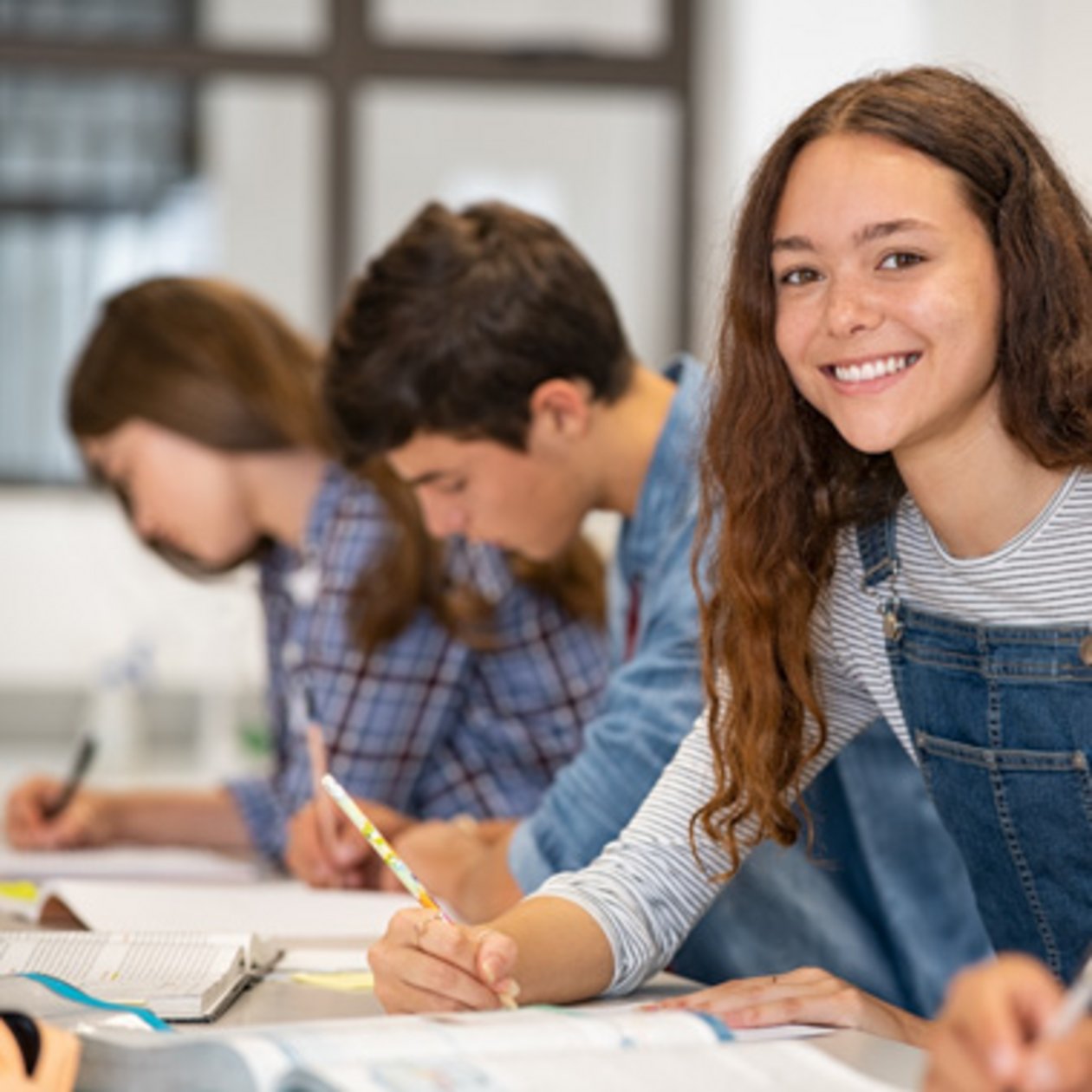
In addition to typical teaching elements, lessons with teenagers focus on speaking and expression skills as well as vocabulary development. Teens are given plenty of room to speak and thus improve their speaking and expression skills, because our native-speaker trainers listen very carefully. Our trainers work increasingly with methods such as role play, discussion rounds, short presentations, film reviews, knowledge quizzes, and interviews.
Teaching materials: Worksheets, audio CDs, short plays, flashcards, song lyrics and music, language games, learning posters, short films, writing games, media room with computers, materials for independent work, dictionaries, role-playing games.
Aim: The main focus is on giving young people space to speak and to simulate everyday situations in dialogs. The young people's world and interests should serve as a linguistic starting point. The direct relationship between the language and the person means that the learning content is memorized, which automatically improves communication skills. At the same time, young people reduce their inhibitions about speaking and enjoy learning a foreign language.
Our concept applies to lessons in English, German as a foreign language (DaF), French, Spanish and Italian.